
Padang Bai Port in East Bali

Padang Bai Port Guide: Your Gateway to Lombok and the Gili Islands
If Gili Trawangan, Gili Air, or Lombok is your final stop, Padang Bai Port is where the real open-water adventure begins. Tucked into a natural deep-water bay in East Bali’s Manggis district, this harbor feels different from Sanur or Jungut Batu the moment you arrive bigger swells, longer horizons, and a noticeably more serious atmosphere as crews prepare for the Lombok Strait crossing ahead.
1. Why This Port Exists for the Long Crossing
Unlike Sanur Port, which mainly handles short hops to the nearby Nusa islands, Padang Bai Port is built specifically for the tougher, longer haul across open water to Lombok. The harbor operates as a dual-purpose facility a large public ferry terminal for Ro-Ro cargo vessels sits alongside a dedicated fast boat section, which is where Dcamel and other operators load passengers headed to the Gili chain and West Nusa Tenggara.
It’s worth knowing this distinction before you arrive, because the two terminals are physically separate. Follow the fast boat signage, not the ferry queue a mix-up here is one of the more common rookie mistakes we see at check-in.
2. What Check-In Actually Feels Like
Padang Bai Port infrastructure has come a long way solid concrete walkways lead to secure floating pontoon piers, so you’ll board completely dry-footed via the pontoon bridge, no wading required here.
Report to the Dcamel check-in desk just outside the main harbor gate about 60 minutes before departure. Your booking confirmation gets verified and exchanged for a boarding pass and manifest tag, then you’re guided through to the waiting area. Because this crossing runs longer and further than the Lembongan or Penida routes, staff tend to be a little more thorough with manifest checks here it’s part of the safety protocol for open-ocean travel, so budget the full hour rather than cutting it close.
3. The Crossing: Padang Bai to Gili Islands and Lombok
Dcamel’s fast boat departs Padang Bai Port at 10:30 AM daily, running the D’Camel ALX our aluminium-hulled flagship, built with triple Volvo 850 HP water-jet engines and a max speed of 35 knots. This isn’t the boat we’d choose for a calm 30-minute Lembongan hop; it’s built for exactly this kind of route, where the aluminium hull handles open Lombok Strait swells noticeably better than a standard fiberglass boat once you’re past the sheltered coastline.
The journey takes roughly 1.5 hours, dropping passengers first at Gili Trawangan Port, then Gili Meno and Gili Air Port, before continuing on to Bangsal Port on the Lombok mainland. Fast boat traffic through the strait is heaviest in the morning most operators, Dcamel included, run their crossings between roughly 08:30 AM and 11:00 AM, timed deliberately to take advantage of calmer morning seas before afternoon winds pick up across the channel.
4. Getting There and Avoiding the Morning Rush
Padang Bai Port sits about 1.5 – 2 hours from Kuta, Seminyak, or Canggu via the Ida Bagus Mantra Bypass, so if you’re booked on the 10:30 AM sailing, plan for an early hotel pickup earlier than you’d expect for a mid-morning departure.
The terminal’s busiest window is 8:00 – 10:30 AM, when several large-capacity fleets load passengers simultaneously and the waiting area fills up fast. Since Dcamel’s crossing is concentrated in this same morning window (there’s no realistic way around it for this particular route the sea conditions genuinely favor mornings), the practical move is simply to arrive right on the 60-minute mark, use the guided check-in lane, and avoid standing in the general queue outside.
5. Safety on the Open Water
Crossing the Lombok Strait is a different proposition from the sheltered Badung Strait crossings to Lembongan or Penida, and it’s treated that way. The local harbor master (Syahbandar) enforces strict clearance protocols, and captains monitor live wave height and wind data before every departure. If conditions turn rough during shoulder or rainy season, Dcamel’s check-in team will notify passengers directly with updated timing or rebooking options it’s rare, but it’s the reason the ALX’s engine redundancy and aluminium hull matter on this specific route.
Explore More Travel Guide
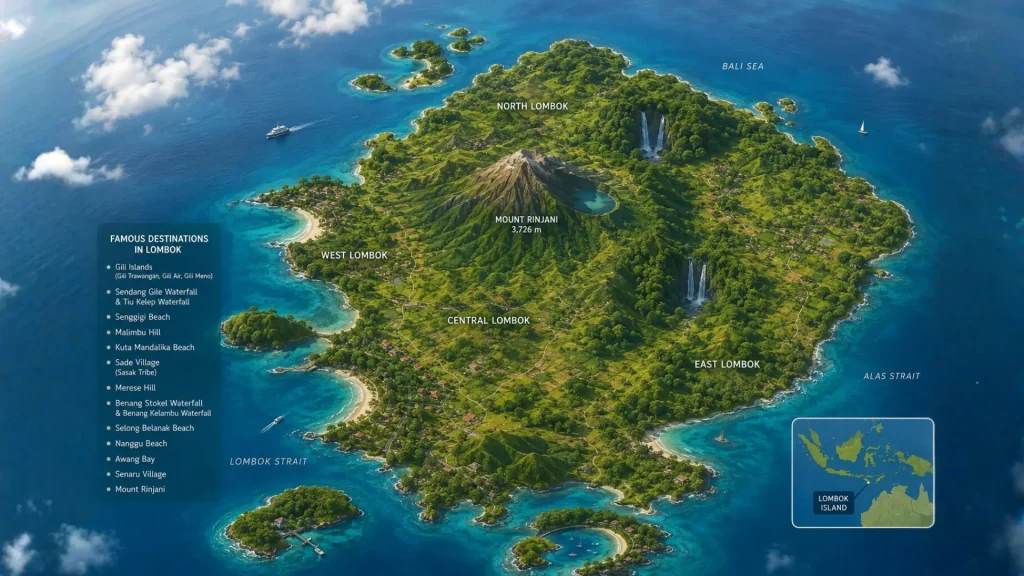
Discover the best of Lombok Island, from stunning beaches and mountain landscapes to cultural attractions and local experiences. Find practical travel insights to plan your perfect getaway.

Planning a trip to Gili Trawangan? This guide covers arrival experiences, harbor facilities, transportation options, and practical tips to help you navigate the island with confidence.

Get familiar with Gili Air Port before you arrive. Learn about arrival points, local transportation, nearby amenities, and useful travel advice for a smooth island experience.
