
Devil Tears Nusa Lembongan
- 4.0
(332 Reviews)
- Nusa Lembongan Destination
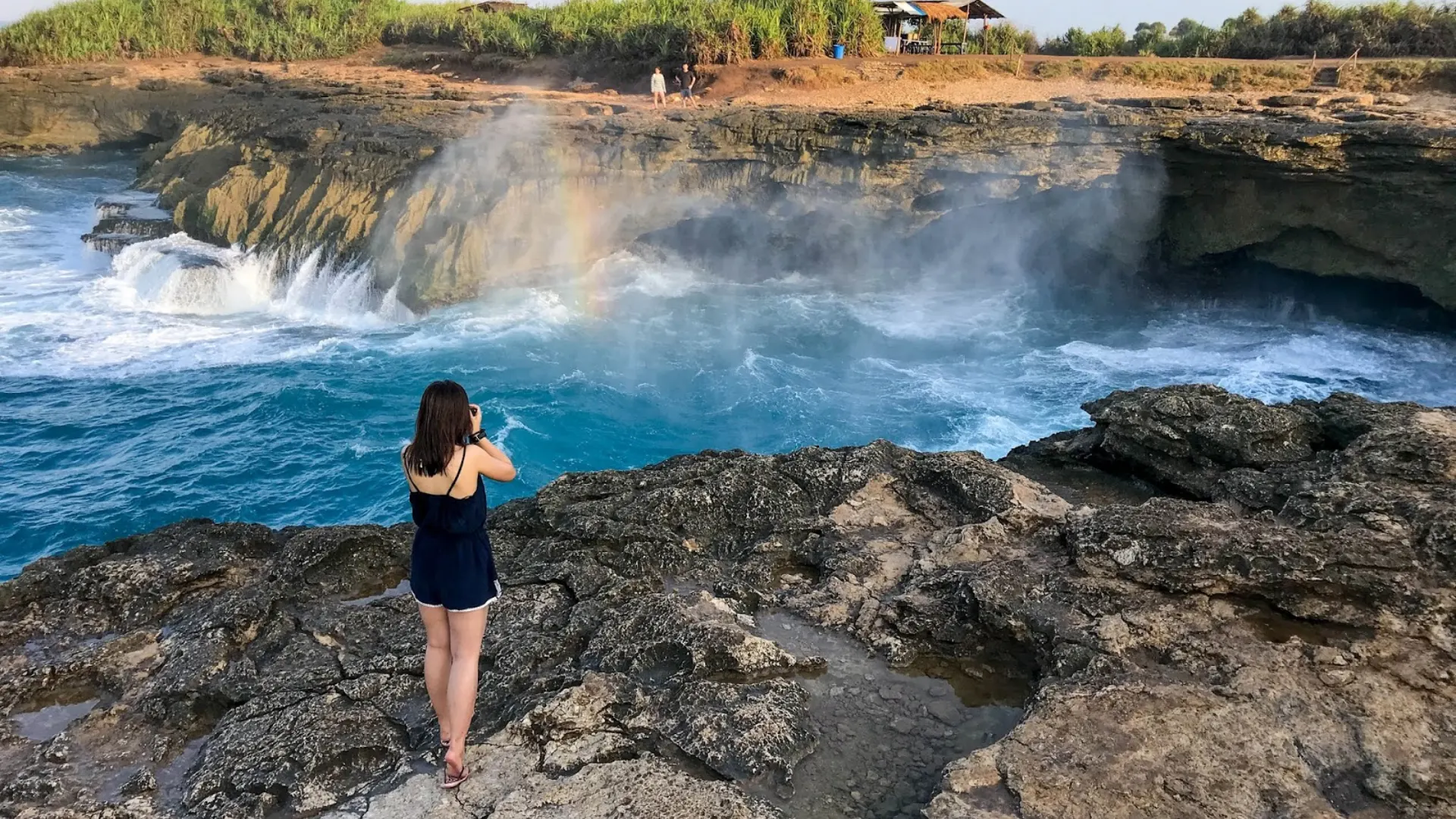


Devil Tears, Nusa Lembongan: Where the Ocean Explodes Against Limestone Cliffs
The first time you hear it before you see it a deep, hollow boom rolling up from the cliff edge, like the island itself is breathing. That’s Devil Tears Nusa Lembongan. Every few seconds, a wave gets funneled into a narrow limestone crevice below the cliff, and the trapped pressure sends a plume of seawater shooting several meters into the air. Stand there for twenty minutes and you’ll understand why local guides still call it, half-jokingly, the moodiest spot on Nusa Lembongan Island.
Long before it became an Instagram fixture, this stretch of coastline had a much quieter identity. Villagers from Jungut Batu knew it as Batu Blek a windswept clifftop pasture where livestock used to graze. The dramatic name “Devil Tears” only came later, once photographers and travel bloggers started sharing the rainbow-mist shots that now define the spot online.
1. What Actually Makes Devil Tears Worth the Detour
It’s not just the spray. The limestone shelf along Devil Tears Nusa Lembongan is carved with narrow sea caves and channels, and when a strong swell hits, the water and air inside get compressed hard enough to blast upward with real force sometimes over a dozen meters. It’s dramatic in person in a way photos genuinely undersell, mostly because you feel the boom through the rock before you see the spray.
If you time it right locals recommend somewhere between 1:00 PM and 4:00 PM the afternoon sun cuts through the mist at just the right angle to throw small, circular rainbows over the water. It doesn’t happen on command, and cloud cover can kill it entirely, so treat it as a bonus, not a guarantee.
There’s a second, quieter reward here too. Scattered across the flat limestone shelf are shallow natural tide pools. Come back in the late afternoon, closer to golden hour, and these turn into near-perfect mirrors, catching the color of the sunset a favorite five-minute stop for anyone doing a slower lap of the headland after the main show has died down.
2. Getting There: Devil Tears Fits Naturally Into a Bigger Day
Devil Tears sits on the southwestern tip of the island, which works in your favor it’s part of a tight cluster of attractions that most visitors cover in a single loop. The typical order runs: arrive through the main harbor, stop at the Gala-Gala Underground House, unwind on the white sand at Dream Beach Nusa Lembongan, swing past the calmer swimming spot at Sandy Bay Nusa Lembongan, and close the afternoon at Devil Tears as the light turns golden. Each stop is only a 2–5 minute scooter ride from the next, which is exactly why this southwest circuit is usually built into the island’s One Day Tour Full Activities in Nusa Lembongan package rather than treated as a standalone trip.
For travelers coming from the Bali mainland, this whole loop starts with the short crossing itself. D’Camel Fast Boat runs the Sanur Port to Jungut Batu route in about 30 minutes, with departures at 09:00, 13:30, and 17:00 the morning or early-afternoon sailing gives you enough daylight to comfortably fit the entire southwest circuit, Devil Tears included, before heading back.
3. Entry Fees and Timing: What You'll Actually Pay
There’s a local admission fee of IDR 25,000 per person, collected at the entrance gate and put toward maintaining the safety infrastructure along the cliffs. Keep in mind this is separate from the regional Klungkung tourism levy every visitor arriving through the island’s main ports pays an environmental retribution fee of IDR 25,000 for adults and IDR 15,000 for children, payable in cash at the harbor or in advance via QRIS through the official atixbali.com portal. Two different fees, two different purposes worth knowing so you’re not caught off guard.
The site itself is technically open around the clock, but visibility and safety oversight are really only reliable between 8:00 AM and 6:15 PM WITA. Outside that window, skip it.
4. Safety: This Isn't a Beach, and the Ocean Doesn't Warn You Twice
This is the part locals are genuinely strict about, and for good reason. The cliffs here are known for rogue waves swells that can surge over the limestone ledge with no warning. The Klungkung Regency government installed a 180-meter barrier of ironwood (kayu uli) along the most exposed vantage points, and it’s there as a hard line, not a suggestion.
A few rules worth actually following:
- Wet rock means stay back: Damp, dark patches on the limestone mean a wave reached there recently don’t cross the wooden barrier to get closer.
- Don’t turn your back on the ocean: It’s tempting for the photo, but face the sea so you can see a swell coming.
- Skip the flip-flops: The limestone is sharp and slick when wet. Trainers or rugged outdoor sandals with real grip are the difference between a good afternoon and a bad fall.
