
Mangrove Forest Nusa Lembongan
- 4.0
(232 Reviews)
- Nusa Lembongan Destination


Mangrove Forest Nusa Lembongan: Paddling Through the Island's Quiet Side
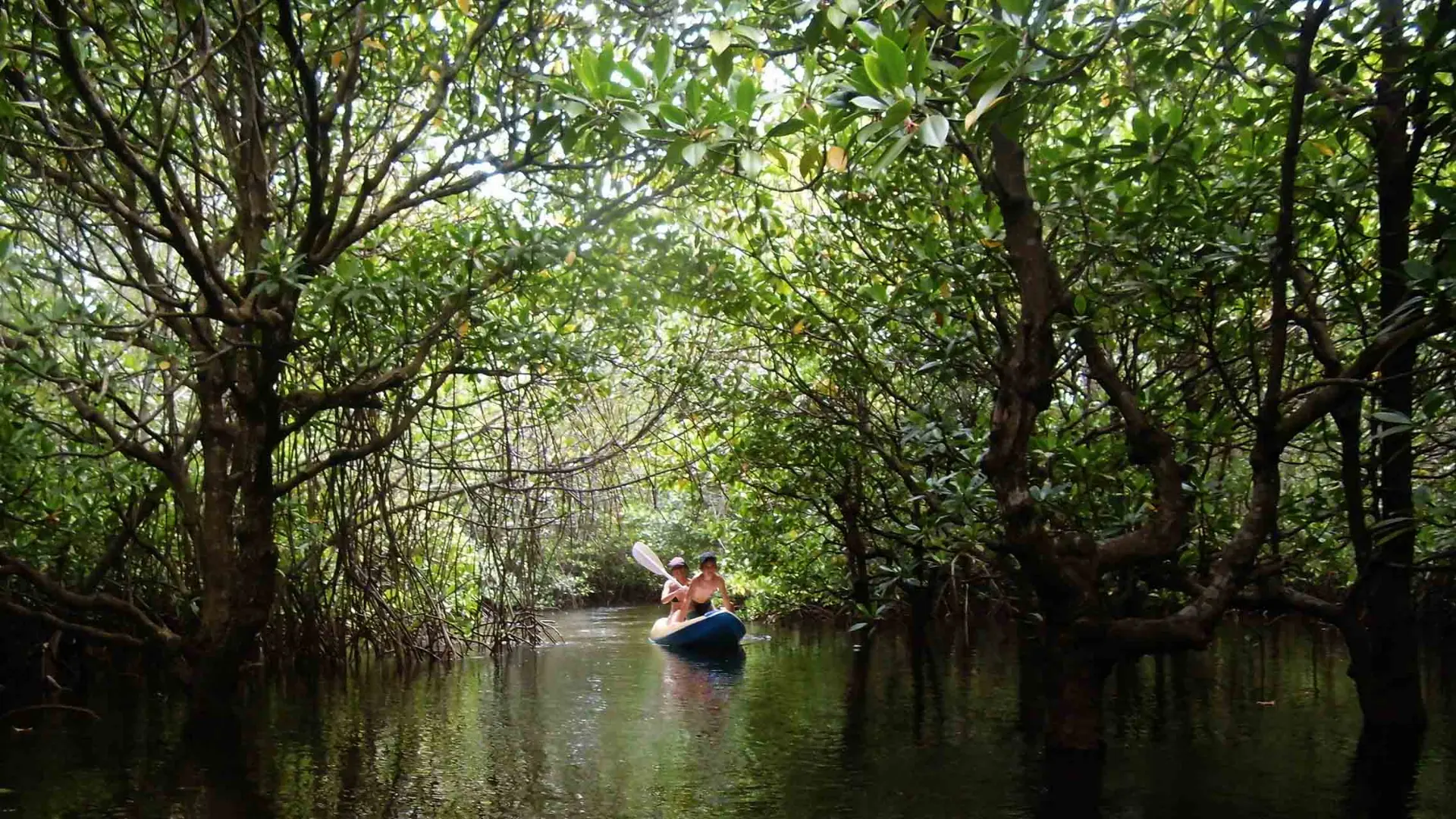
There’s a moment, about ten minutes into a sampan ride through the Mangrove Forest Nusa Lembongan, when the wide, sunlit estuary you started in narrows into something else entirely, a cool green tunnel where the canopy closes overhead and the only sound left is the guide’s bamboo pole dipping into the water. No engine, no chatter from other boats, just roots, water, and light filtering through the leaves. Then, without much warning, the channel opens back out toward the sea, and Mount Agung appears across the water on mainland Bali like the forest was building up to that view the whole time.
It’s a different kind of experience from the cliffside drama at Devil Tears Nusa Lembongan on the other side of the island. Where Devil Tears is loud, wild, and photogenic in bursts, the mangroves reward patience, this is the slow, quiet half of Lembongan Island, and a lot of visitors are surprised by how much they end up preferring it.
1. What Mangrove Forest Nusa Lembongan Actually Is
The mangrove forest nusa lembongan wetland stretches across roughly 212 hectares along Lembongan’s northeastern coastline, acting as a natural buffer that’s protected this side of the island from tidal erosion for generations. Inside, an intricate network of narrow waterways cuts through dense, old-growth saltwater forest, genuinely one of the better-preserved coastal ecosystems in this part of the Bali archipelago, and a spot eco-conscious travelers tend to seek out specifically.
2. Getting on the Water: Costs and Options
There’s no entry fee to walk the public perimeter or coastal road bordering the wetland, you only pay once you want to get on the water. Your options:
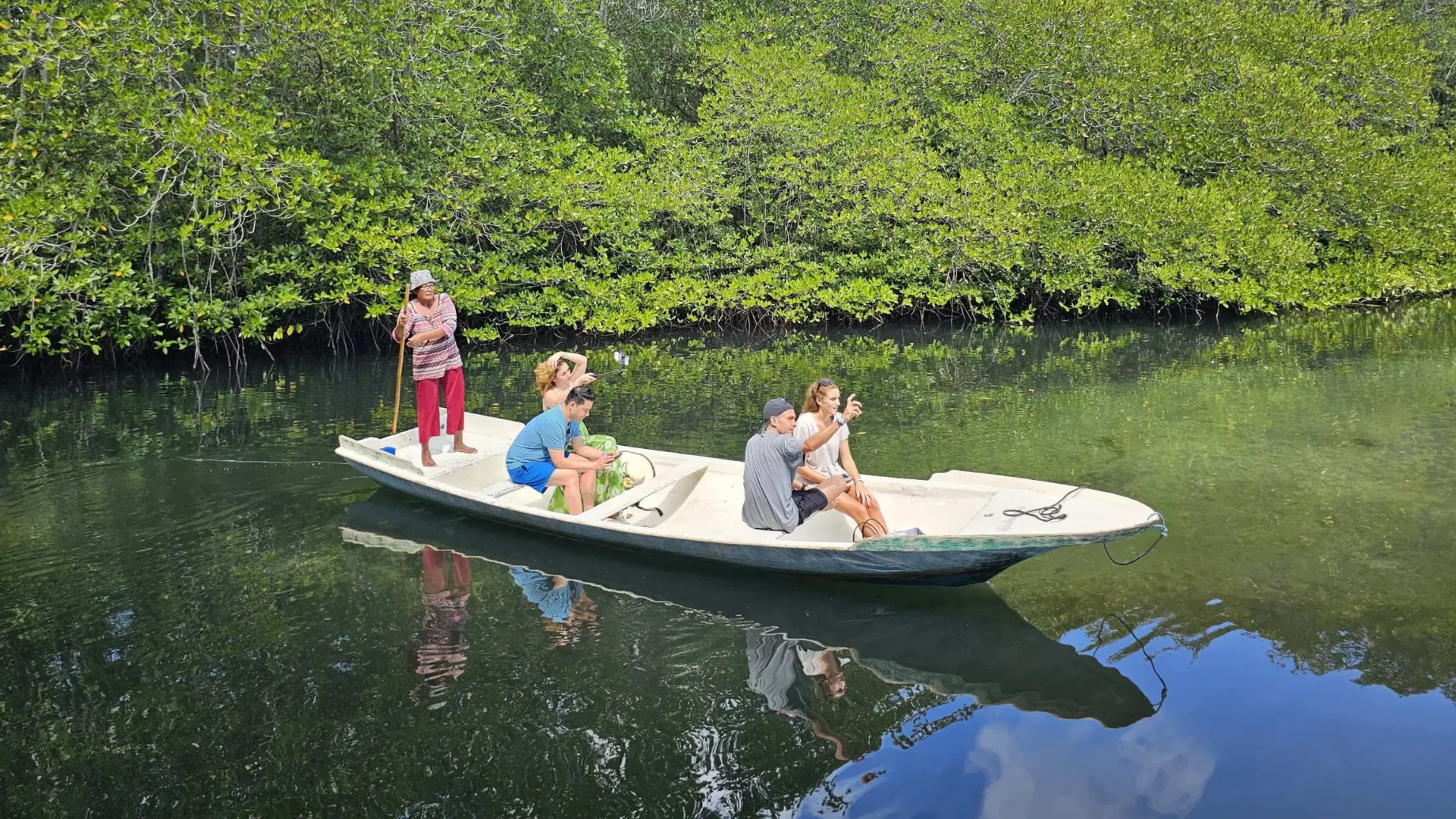
- Traditional sampan (wooden outrigger boat): IDR 50,000–100,000 per person, or a flat private rate of IDR 150,000–200,000 for up to 4 people, for a 20–30 minute guided ride
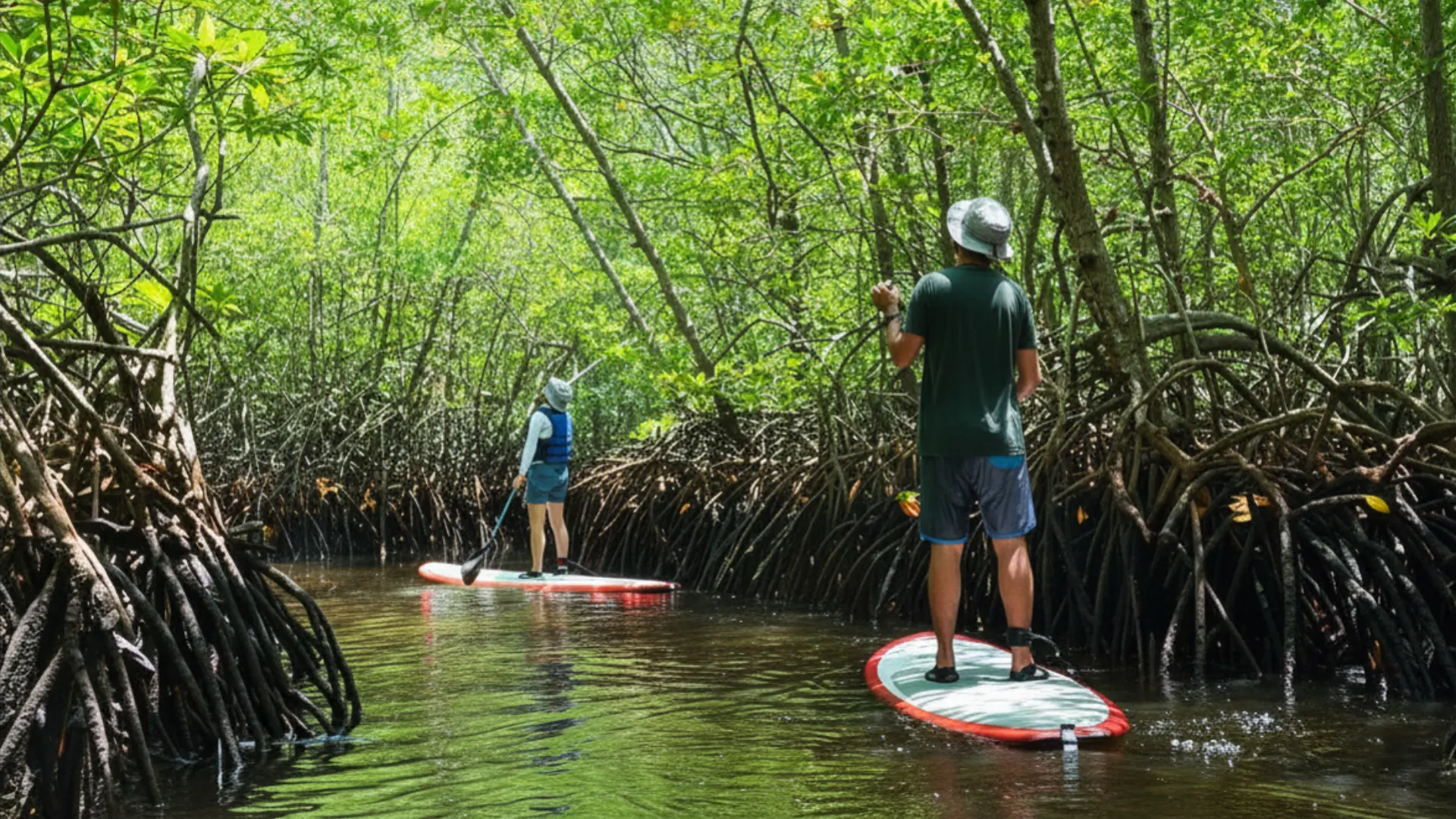
- Kayak or SUP (self-paddled): IDR 50,000–100,000 per hour; transparent kayaks cost slightly more
- Mangrove exploration is also built into the Lembongan Stay Well Package, if you’d rather have it bundled with the rest of your island itinerary.
3. Why There Are No Engines Allowed
Local communities enforce a strict no-engine rule inside the inner channels motorized boats simply aren’t allowed past the outer estuary. Instead, sampans are poled or paddled by hand, usually by older village guides who’ve been navigating these channels their whole lives. It’s not just an eco-regulation for show; it’s the reason the ride feels the way it does. Without engine noise, you actually hear the forest water lapping against roots, birds shifting in the canopy, the occasional splash of something ducking underwater that you won’t quite catch sight of.
Keep an eye on the mudflats as you glide past: fiddler crabs, mudskippers, and the odd monitor lizard swimming between roots are common sightings. Overhead, the canopy is a nesting site for herons and kingfishers, and if you’re lucky and quiet the critically endangered Bali Myna occasionally shows up on the upper branches.
The forest itself is mostly built from Rhizophora mangroves, recognizable by their tall, arching stilt roots holding the trunks above the tideline, mixed with Avicennia (locally called api-api), which breathe through pencil-thin roots poking up through the mud. Underneath it all, this root system works as a nursery for juvenile reef fish before they head out to open water which is part of why the area matters ecologically well beyond what you’ll see on a single visit.
4. When to Mangrove Forest Nusa Lembongan
Tides run this place, not the clock. Go at extreme low tide and your sampan or kayak can bottom out on exposed mud and roots; go at high tide near the outer estuary and you’ll be fighting current instead of drifting through it. The window locals recommend is early morning, between 7:00 AM and 9:30 AM WITA, water levels tend to sit right, the air is still cool, birds are actively feeding, and the wind hasn’t picked up yet.
5. Getting There from the Boat Harbor
The mangrove forest sits on the northeast edge of the island, about 3 km an 8 to 10-minute scooter ride from Jungut Batu Port along a flat coastal road lined with beachfront cafes. If you’re coming over from the Bali mainland, Jungut Batu is also exactly where D’Camel Fast Boat docks on the Sanur–Lembongan crossing, which takes about 30 minutes. Check the current Boat Departure Schedule before you plan your morning catching an early sailing gives you enough time to rent a scooter, ride up the coast, and still catch the mangroves during that ideal 7:00–9:30 AM window.
