
Dream Beach Nusa Lembongan
- 4.5
(155 Reviews)
- Nusa Lembongan Destination



Dream Beach Nusa Lembongan: What to Expect Before You Visit
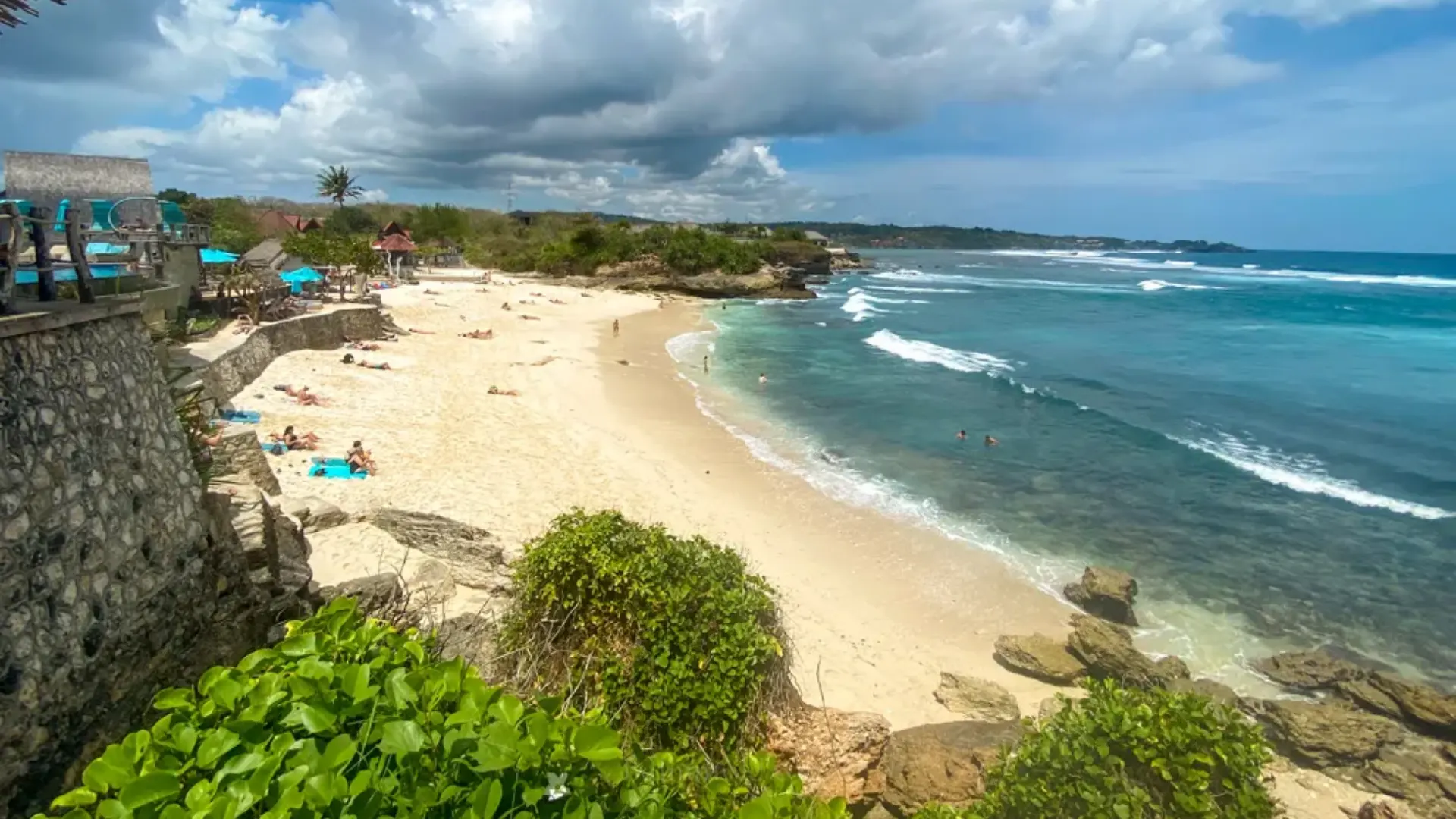
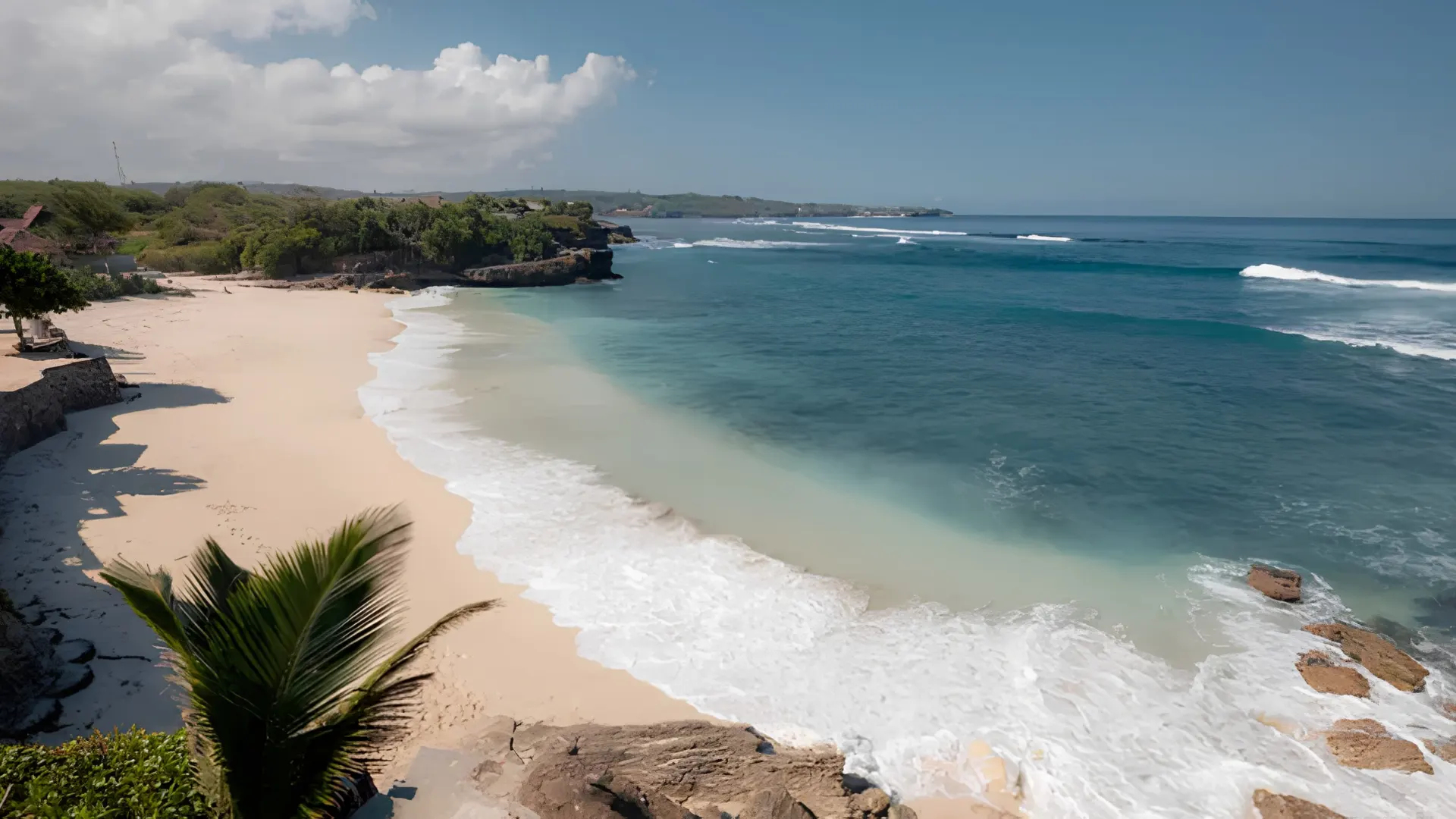
There is a moment, about halfway down the steep concrete path that leads to Dream Beach, where the cliff opens up and the bay appears below you all at once a 115-meter arc of white sand framed by limestone headlands, with the Indian Ocean pushing long, clean swells directly into the cove. Most visitors stop walking at that point. Not because the path is difficult, but because the view catches them off guard. Dream Beach has that effect. Even travelers who have spent a week island-hopping across Nusa Lembongan Island tend to rank this southwest pocket among the most visually striking spots on the entire island.
This guide covers everything you need to know before you visit the layout of the beach, facilities, safety, surrounding landmarks, and how to get there from Jungut Batu Port in Nusa Lembongan after stepping off your fast boat crossing from Bali.
1. What Dream Beach Actually Looks Like Up Close
Dream Beach sits along the southwestern coastline of Nusa Lembongan, enclosed on both sides by high weathered limestone cliffs that drop almost vertically to the waterline. The sand itself is fine and white, noticeably different in texture from the darker volcanic beaches along Lembongan’s northern shore and the bay faces southwest, which means it receives the full force of Indian Ocean swells rolling in from open water. The result is a beach that looks like a postcard from the clifftop but behaves like serious ocean at the waterline.
The beach is compact enough to walk end to end in under two minutes, which gives it an intimate atmosphere even on busy days. At the southern end, a rocky headland separates Dream Beach from the neighboring coastline. At the northern end, the cliff path leads up to Dream Beach Huts resort, which sits directly above the bay and operates the cliffside restaurant and two-tiered infinity pool visible from the sand below.
2. Facilities, Entry Fees, and Pool Access
There is no entrance fee to access Dream Beach itself. The public sand is free to use, and the only cost for most visitors arriving by scooter or private transport is a small parking fee of IDR 2,000 to IDR 5,000 collected at the top of the access path. That covers the full beach day sunbathing, swimming in the safe zone, walking the cliff edges, watching the shore break. No wristbands, no minimum spend, no time limits.
The one paid option worth knowing about is the Dream Beach Huts infinity pool, which sits on the cliffside directly above the bay and is open to non-guests. Day access is approximately IDR 50,000 per person, or is included when ordering food and beverages from the cliffside restaurant.
The upper pool tier looks directly out over the bay and the open ocean beyond it is genuinely one of the better vantage points on the southwestern tip of the island, particularly in the hour before sunset. The restaurant serves food and drinks throughout the day; no reservation is required for non-guest pool access during regular hours.
3. Sea Conditions and Safety: Read This Before You Swim
Dream Beach is one of the most beautiful stretches of sand on Nusa Lembongan Island and one of the most technically demanding for swimmers. The bay faces open ocean with no reef to buffer incoming swells, which means the shore break is powerful and the water column between the surface and the sandy bottom moves considerably even when the sea looks calm from the clifftop. A severe undercurrent runs through the center of the bay, particularly during high tide when rip currents become unpredictable and difficult to read from the waterline.
Swimming is safe only within the shallow close-to-shore zone — the first few meters of water where the depth remains ankle to knee height and the wave energy has already dissipated. Wading, sitting at the waterline, and watching the shore break from the sand are all perfectly enjoyable and what most visitors do here. Swimming out toward the center of the bay is genuinely dangerous regardless of how experienced a swimmer you are, and is strongly discouraged at all tide phases.
If you are traveling with children, establish the boundary at the waterline before they enter the water. There are no lifeguards stationed at Dream Beach. The ocean here is beautiful precisely because it is powerful — treat it accordingly.
4. Surrounding Landmarks Within Walking Distance
The southwestern tip of Nusa Lembongan is the most landmark-dense corner of the island, and Dream Beach sits at the center of it. From the beach, a 5-minute walk south along the cliff path brings you to Devil Tears Nusa Lembonga a rocky marine headland where incoming swells compress into sea caves and blow massive plumes of ocean spray upward through the blowhole formations.
It is one of the most viscerally dramatic natural features in the Nusa islands, and completely different in character from the calm beauty of Dream Beach despite being less than 500 meters away. Devil’s Tear is the standard sunset viewing point for the southwestern coast stand behind the designated barrier lines, which exist for good reason, and watch the light change over the open ocean as the swell keeps working the rocks below.
Continuing slightly further along the coast from Devil’s Tear leads to Sandy Bay (locally also called Sunset Beach), a more sheltered inlet with a beach club atmosphere and a calmer water entry than Dream Beach. A short ride inland from the beach access roads brings you to the Gala-Gala Underground House a labyrinth of subterranean rooms hand-carved into the natural limestone by a local priest over several decades, and one of the more genuinely unusual cultural sites on the island.
Heading eastward by scooter for 5 to 10 minutes from Dream Beach brings you to the Yellow Bridge, the bright suspension bridge connecting Nusa Lembongan with its smaller sister island, Nusa Ceningan a landmark worth crossing both for the views from the bridge itself and for the Ceningan coastline on the other side.
5. Getting to Dream Beach from Jungut Batu Port
From Jungut Batu Port in Nusa Lembongan the main arrival harbour for fast boats crossing from Sanur, Bali Dream Beach is approximately 3.4 to 3.5 kilometers by road, following the main paved route through the island’s center toward the southwest coast. Under normal road conditions, the ride takes 12 to 15 minutes by scooter.
The road is mostly flat and well-surfaced with a few gentle rolling sections as you approach the southwestern tip. Scooter rentals are available directly near the harbor dock upon arrival, typically ranging from IDR 80,000 to IDR 100,000 per day. For groups or families traveling with luggage, open-air shuttle vehicles can be chartered from the main road near the port for a fixed fare agreed before departure.
The crossing from Sanur to Nusa Lembongan takes 30 minutes aboard Dcamel Fast Boat, which has been operating this route since 2016 with three daily departures from Sanur at 09:00, 13:30, and 17:00. The return from Lembongan to Sanur runs at 08:30, 12:30, and 16:00. All three vessels in the Dcamel fleet such as Dcamel ALX (193 passengers) and Dcamel Max (137 passengers) are covered under Jasa Raharja government insurance, with crew ranging from 6 to 8 trained personnel per vessel depending on the boat.
If you are planning to visit Dream Beach as part of a day trip from Bali, the 13:30 departure from Sanur gives you a full afternoon on the southwestern coast enough time to cover Dream Beach, Devil’s Tear, and Sandy Bay before the return crossing. Tickets and full schedule are available at dcamelfastboat.com.
